Wednesday, September 30, 2026

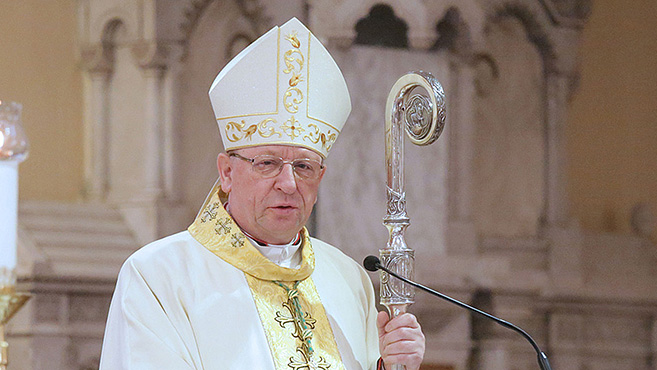
Pope Leo XIV appoints Ferenc Palánki as archbishop, a defender of the family and member of the episcopate that set limits on Fiducia supplicans


Pope Leo XIV appoints Ferenc Palánki as archbishop, a defender of the family and member of the episcopate that set limits on Fiducia supplicans

Pope Leo XIV has appointed Monsignor Ferenc Palánki as the new metropolitan archbishop of Kalocsa-Kecskemét, in Hungary. The former bishop of Debrecen-Nyíregyháza, aged 62, has publicly defended marriage between a man and a woman, the family, and the transmission of life, and was part of the Hungarian episcopate that, following the publication of Fiducia supplicans, called for avoiding joint blessings of same-sex couples and couples in irregular situations.

The Holy See announced the appointment on Thursday, September 3, while also communicating that Leo XIV had accepted the resignation submitted by Monsignor Balázs Bábel from the pastoral governance of the archdiocese.

Palánki thus arrives at one of the metropolitan sees of the Church in Hungary after nearly eleven years leading Debrecen-Nyíregyháza, a diocese to which he was appointed by Francis on September 21, 2015. His episcopal career shows a special focus on the family and marriage, along with a long-standing dedication to priestly formation and Canon Law.

Marriage and the transmission of life

Palánki has defended on various occasions a conception of marriage founded on the union between a man and a woman and oriented toward the family and the transmission of life.

During the Week of Marriage held in 2022 in Nyíregyháza, in eastern Hungary, he maintained that marriage is of fundamental importance for “the future of humanity” and referred directly to Genesis: “A man leaves his father and mother, joins with his wife, and the two become one.”

The prelate then stated that marital love “is not simply a feeling,” but involves a decision and a commitment. He also explicitly linked marriage to the transmission of life and the continuity of generations.

This vision also appears in his interventions on the Holy Family. In December 2023, Palánki noted that the mission of spouses consists in helping each other to reach God and to love the children entrusted to them.

In an extensive interview given in 2021 to the media of his diocese, he also recalled the Catholic education he received during his childhood in Csesztve, a small town in northern Hungary. Palánki highlighted that he grew up in an environment where there were “clear and unequivocal” concepts about what marriage meant, what the place of children was, and what it meant to sacrifice oneself for others.

The Hungarian episcopate set limits on Fiducia supplicans

The new archbishop was also a member of the Hungarian Episcopal Conference when it responded in December 2023 to Fiducia supplicans, the declaration of the Dicastery for the Doctrine of the Faith that opened the possibility of imparting non-liturgical pastoral blessings to couples in irregular situations and of the same sex.

The response of the Hungarian bishops came on December 27, just nine days after the publication of the Vatican declaration. The Episcopal Conference began by recalling that Fiducia supplicans “does not change the faith and perennial teaching of the Catholic Church on marriage and sexual morality.”

The bishops noted that priests could individually bless any person who requested a blessing, regardless of their gender identity or sexual orientation.

However, they set a limit on the application of the document in Hungary: they called for “always avoiding the joint blessing” of couples living together without having contracted a valid marriage before the Church, of those in a marriage the Church considered invalid, and of same-sex couples.

In this way, the Hungarian episcopate ruled out that the possibility contemplated by Fiducia supplicanswould translate in the country into blessings imparted jointly to these couples.

More: https://x.com/infovaticana/status/2095468490907885841?s=46&t=IydJ-X8H6c0NM044nYKQ0w

Father Martin at NYC LGBT “Mass”: Young Catholics Pray and Protest Sacrilege


Posted by “Cool Catholics” via Facebook:

Young Catholics with TFP Student Action gathered outside the Church of St. Ignatius Loyola in New York City to pray the Rosary and protest what they described as a sacrilegious and pro-LGBT Mass involving Jesuit Father James Martin.

The demonstrators said their presence was intended to defend Catholic teaching on marriage, sexuality and human dignity. TFP has repeatedly organized Rosary rallies in response to Father Martin’s public ministry and LGBT-related events.

The Church of St. Ignatius Loyola has an “LGBT Catholics & Friends” parish ministry, which describes itself as a ministry for LGBT parishioners, family members and friends.

Whatever disagreements Catholics may have over how pastoral ministry should be conducted, the Church cannot change the truths entrusted to her. Catholic charity must never mean abandoning Catholic truth—and defending Catholic truth must never mean abandoning charity.

The Rosary remains one of the most powerful ways Catholics can respond: pray, remain faithful, and ask God for conversion and holiness.

Our Lady, Seat of Wisdom, pray for us.

#CatholicNews #CatholicChurch #CatholicFaith #TFPStudentAction #JamesMartin


Young Catholics Pray and Protest Heresy and Sacrilege Outside NY Church  

Tuesday, September 29, 2026

BREAKING: Catholic diocese hid Vatican decree reinstating suspended traditional priest

A Vatican decree declared Cardinal Anders Arborelius’ 2024 suspension of a traditionalist priest invalid, but the diocese reportedly withheld it from clergy and faithful for months.

Featured Image
Swedish Cardinal Anders ArboreliusPhoto by Christopher Furlong/Getty Images

VATICAN CITY (LifeSiteNews) — The Diocese of Stockholm kept silent for nearly four months about a Vatican decree declaring “invalid” Cardinal Anders Arborelius’ 2024 suspension of a traditionalist priest while failing to provide the financial support required by the decree, according to investigative reporting by Diane Montagna.

“When no response or reaction came from the Cardinal, I was compelled to bring the matter to the attention of the Holy See … with a copy to the Cardinal and the Nuncio. I later also sent the original to Rome. The (Dicastery for) Clergy has confirmed that they received it,” Father Tobias Unnerstål said in a September 3 letter addressed to his benefactors.

Unnerstål had led Christ the King Parish in Gothenburg, Sweden, since 2007. The parish flourished under his traditionalist leadership.

However, his traditional Catholic spirituality subsequently became a point of contention within the local curia. After being accused of “emotional, psychological, and spiritual abuse” and suspended, the priest appealed to Rome. Although the Dicastery for Clergy ultimately found the suspension invalid, the decree imposed separate three-year restrictions on Unnerstål’s ministry. This decree was reportedly withheld by the Stockholm chancery.

A separate appeal is currently pending before the Apostolic Signatura, seeking the removal of a series of pastoral restrictions imposed by the diocese and subsequently upheld by the Dicastery for the Clergy.

Montagna brought international attention to the case, independently reconstructing and verifying allegations detailed in a dossier produced by a group of lay Catholics from Unnerstål’s diocese to show the “serious irregularities” of the Church in Sweden. The “Thomas More Report,” compiled over the course of two years, is now available in both Swedish and English.

Problems with diocesan authorities began in October 2020 when Cardinal Arborelius and Vicar General Father Pascal-René Lung formally approved, in writing, Unnerstål’s proposal to establish an Oratory modeled on that of St. Philip Neri. The following year, on February 15, a seminarian, Joseph Rizk, filed a complaint against Unnerstål, alleging “emotional, psychological, and spiritual abuse.” On April 22, the Swedish priest was summoned and questioned by the vicar general but was not allowed to see the text of the complaint against him.

On August 7, 2021, however, Unnerstål was contacted by a parishioner who showed him a letter circulated by the then-assistant parish administrator, Birgitta Gelotte. In the letter, Gelotte explained that every effort had to be made to block the traditional Oratory project and that she found in Rizk a useful ally.

According to the Thomas More Report, as early as 2019, Gelotte had been telling other clergy members that Unnerstål was an alcoholic and homosexual in an apparent effort to discredit him. Although the search reportedly produced no compromising material concerning Unnerstål, the former parish assistant apparently obtained permission from the diocese to search the parish’s computer servers for compromising photographs. The search yielded only a single photograph of Rizk wearing a T-shirt and swim shorts during a parish trip to Malta.

In mid-August 2021, Unnerstål reportedly showed the letter to the vicar general. Although the latter promised that he would take steps to address Gelotte’s conduct, he ultimately did no more than call her to warn that Unnerstål was in possession of the letter.


More: https://www.lifesitenews.com/analysis/catholic-diocese-hid-vatican-decree-reinstating-suspended-traditional-priest/

The “Sword of Saint Michael”

Fountaine Saint-Michel, Paris

Skellig Michael (Sceilg Mhichíl) off the coast of County Kerry is a rugged island monastery founded in the 6th century and dedicated to Saint Michael the Archangel. It is part of a remarkable 2,600-mile long alignment of seven sanctuaries dedicated to St. Michael, stretching from Ireland to Israel. Known as the “Sword of St. Michael,” Skellig is often described as its western tip. Along this line are: * Skellig Michael (Ireland) * Michael's Mount (Cornwall, UK).


Monday, September 28, 2026

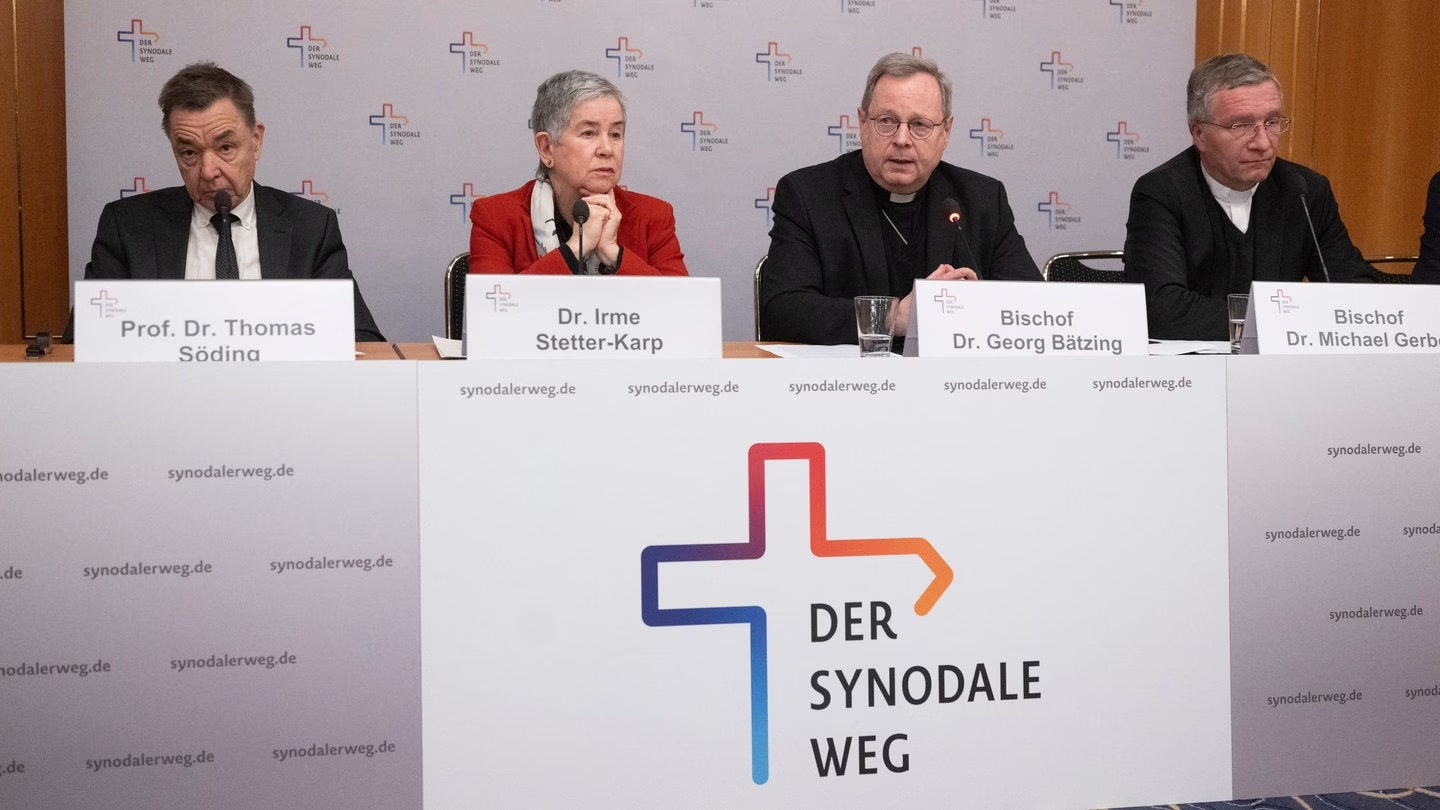
The Long Stalling of Germany’s Synodal Way

After years of debate and revisions to its statutes, the new Synodal Conference still lacks Vatican approval. The postponement of its November meeting also reflects the change in direction taken by the Holy See under Leo XIV.

The first meeting of the Synodal Conference of the Catholic Church in Germany, scheduled for 6 and 7 November in Stuttgart, will not take place. Hotel rooms booked for delegates and bishops have already been cancelled, and no alternative date has yet been set. The announcement was made on Friday 28 August by the Central Committee of German Catholics (ZdK), the lay body which, together with the German Bishops’ Conference (DBK), was due to establish the new organisation. There is only one reason: the Vatican has still not approved the statutes establishing it.

This, more than anything else, shows how the ground had already begun to shift beneath the German Synodal Way by 8 May 2025 — a process Robert Francis Prevost had been able to observe at close quarters during his years at the head of the Dicastery for Bishops.

The Synodal Conference is intended to bring together, with equal voting rights, 27 diocesan bishops, 27 representatives of the ZdK and a further 27 Catholics elected from among clergy and laity, making a total of 81 members tasked with dealing with the life of the Church in Germany at national level. It is meant to be the culmination of the German Synodal Way (Synodaler Weg), the reform process launched in 2019 in the wake of the clerical sexual abuse scandal, after the independent study known as the MHG Study had, in the autumn of 2018, quantified for the first time the scale of abuse within the German Church.

The Synodal Way concluded in March 2023, after six often tense plenary assemblies and around 150 pages of resolutions on issues including the ordination of women as deacons, lay preaching during Mass and priestly celibacy. Its most ambitious proposal, however, concerned governance: the creation of a permanent body made up jointly of bishops and lay people, replacing the Joint Conference (Gemeinsame Konferenz), which has operated since 1976 and brings together the DBK and ZdK twice a year, but has no decision-making powers.

As early as September 2022, when the proposal was still only a draft, the Holy See made clear that neither the German bishops nor the participants in the Synodal Way had the authority to establish such a body, which risked placing itself in practice above the Bishops’ Conference, contrary to the ecclesiology of the Second Vatican Council. Despite that veto, in March 2023 the Synodal Way nevertheless established an interim body, the Synodal Committee (Synodaler Ausschuss), tasked with drafting, by March 2026, the statutes of the future permanent body. Four diocesan bishops - Cardinal Rainer Maria Woelki, Archbishop of Cologne, and the bishops of Eichstätt, Passau and Regensburg, Gregor Maria Hanke, Stefan Oster and Rudolf Voderholzer respectively - chose not to take part, considering it incompatible with the universal synodal process launched by Pope Francis, while not rejecting synodality itself.

The statutes, drawn up between 2024 and 2025, include from their opening lines a clause specifically intended to reassure Rome: the Synodal Conference is required to “respect the constitutional order of the Church and safeguard the rights of diocesan bishops”. The most sensitive issue, however, remained the actual powers of the new body. The initial draft gave it the authority to deliberate and decide on ecclesial matters of supra-diocesan importance without further qualification. Following objections from Rome, that wording was amended, making decisions subject to “synodal decision-making processes”, an expression taken from the final document of the universal Synod on Synodality, which concluded in 2024. There was also a second issue, this time financial. Part of the Synodal Committee wanted the new financial commission of the Synodal Conference to take over the responsibilities of the board of the Association of German Dioceses (VDD), the body that coordinates the budgets and assets of the country’s 27 dioceses. The proposal met with resistance from, among others, the Bishop of Würzburg, Franz Jung, and the Archbishop of Paderborn, Udo Markus Bentz, and ultimately remained in the statutes only as a non-binding statement of direction.

The resistance has not come solely from Rome. A number of lay people and priests have raised concerns and accused the leaders of the body of excluding those who voiced doubts.

More: https://x.com/silerenonpossum/status/2094684192965599510?s=46&t=IydJ-X8H6c0NM044nYKQ0w

Hello, Florida: Historic Saint Joseph Chapel


Historic St Joseph Chapel, Palm Bay, is currently undergoing the final stages of restoration with a potential opening in November. 


Please pray for a special intention.  

Sunday, September 27, 2026

In Paris: Not a “rock star.” Rather, the Rock

Photo source of Pope Leo in Paris: Cardinal Sarah via Twitter 

“‘Pope mania’ makes a wonderful headline, but I increasingly think it misses the most interesting part of what we are witnessing in France. Of course there is excitement surrounding Leo himself, but hundreds of thousands of people did not simply gather in central Paris to see a celebrity, they gathered for Mass! And what did the supposed ‘rock star’ tell them? Not that they should admire him, but that ‘only God can fill the emptiness within us’; that Jesus Christ gave His life for us; that France possesses a ‘long and beautiful history of faith’; that they should ‘drink from the source that is the pierced heart of Jesus’; and, crucially, that they must not keep their faith in Christ to themselves. ‘Let it overflow.’  For decades we have been told a fairly simple story about France: modernisation means secularisation, Christianity belongs increasingly to the past, and Catholicism will gradually retreat into the private lives of an ageing minority. Then 700,000 people gather for Mass in the heart of Paris, 80,000 young people fill the Stade de France, and adult baptisms are rising dramatically. None of this proves that France is suddenly becoming Catholic again. We should resist romantic conclusions as much as pessimistic ones.

“But it surely tells us that the secularisation thesis is considerably more complicated than we thought.

“Perhaps beneath the ‘Pope mania’ lies something much more consequential: a spiritual hunger which modern secular culture has proved remarkably bad at satisfying. And Leo's message to that hunger could hardly have been clearer:

“‘You thirst for God, for life, for truth, for unity, for peace, for communion and for happiness.’

“Only God, he told them, can ultimately satisfy it.”

- Mark Lambert @sitsio

Francis agreed with everybody before he disagreed

Don’t forget Francis did the same thing to the heretics as he did with the TLM crowd and the orders he gutted like the Franciscans of the Immaculate. You never know what he’s thinking because he agreed with everyone and anyone to save appearances then proceeded with his agenda regardless.

Although it didn’t hurt her bookings on the lecture circuit, which it should be noted includes the Women’s Ordination (sic) Conference which pushes for female “priests”, Phyllis Zagano and the rest of the “female deacons” crowd were being used in just the same way as everyone else. Maybe it was all just about Francis. We may never know.

Scott Smith @hf_222222:

“I want to laugh at this, Francis was always pretending to agree with people before discarding their agenda, but in a way its actually terribly cruel that he kept doing that - Even to someone as deserving of dismissal as Zagano.”


Saturday, September 26, 2026

A moving, historic and game-changing papal pilgrimage to France

“Incredible! I don't know about you, but I am so moved to see what the Pope's visit means in France. He is being received almost like a rock star, but I think it would be a mistake to dismiss this simply as celebrity. In one of Europe’s most determinedly secular cultures, enormous crowds are turning out to see an elderly man dressed in white who comes speaking unapologetically about Christ, the Cross, holiness, vocation, human dignity and eternal things. Last night, 80,000 young people packed the Stade de France and chanted “Leo! Leo!”; today, some 600,000 people registered for the great outdoor Mass.

“You cannot say that does not tell us something vital!

“Secularism may have succeeded in pushing Christianity from much of public life, but it has not abolished the human hunger for transcendence. We still want to know what life means, why we are here, what is good, what is worth sacrificing for and whether death has the final word. Consumerism, politics and technology can occupy us; they cannot answer those questions & we recognise that is what the Pope represents.

“And there is another remarkable dimension to these images. Regardless of what the sedevacantists argue, here is the Bishop of Rome travelling through France and being received quite unmistakably as the Pope. Not merely as another religious leader, but as the successor of Peter. For us Catholics, there is something wonderfully tangible here about Christ’s promise in Matthew 16:18. The papacy is not an abstraction or an internet theory. Peter has a successor, he has a name and a face & billions recognise what that office represents.

“And then there is the extraordinary “soft power” of the Holy See. Leo can speak with presidents and diplomats in the morning, address UNESCO, enter Notre-Dame, fill a national stadium with young people and place questions of peace, human dignity, faith and the common good before an international audience within hours.

“Very few human beings possess a platform remotely comparable to that.

“Which is why the papacy matters so enormously. Used well, its moral authority can reach far beyond practising Catholics. What we are seeing in France is not merely the popularity of Pope Leo XIV. It is a glimpse of the extraordinary missionary potential of the Petrine office itself. The world may call itself secular. It does not appear to have stopped searching for God.”

Mark Lambert @sitsio


French Muslim group targeting traditionalist Catholics admits defeat after Pope Leo visit

THOMAS EDWARDS

SEP. 26, 2026


A French Muslim group focused on sharing Islam with traditionalist Catholics has lamented Pope Leo’s visit and admitted Catholics are better organised and more determined and predicted that France will become Catholic again

A group of French Muslims, who describe themselves as an “association sharing the message of Islam with non-Muslims, particularly traditionalist Catholics”, has lamented the papal visit to France and said that France will once again become Catholic.

Miséricorde pour l’Humanité France, meaning Mercy for Mankind France, posted on X that they felt like a “CIA agent helplessly witnessing the return of the Soviet Union”. The group further predicted: “In 45 years, France will become Catholic again, and we’ll be left with nothing but our tears.”

The post further explained that “the Catholics are much better organised, as well as more determined, than us Muslims and even than the Zionists; you have to know how to recognise the strength of the Catholic international.” The group concluded the post by declaring that “the American Catholics will now flood the world with their soft power, to the detriment of both Muslim spiritual hegemony in Western Europe and the Zionist lobby.”

Miséricorde pour l’Humanité France primarily exists as an online group. On the group’s YouTube page, they organise debates on common talking points around Islam today, for example Muhammad’s consummation of his marriage to Aisha when she was just nine years old, violence in Islam and the Quran’s historical context. These feature the group debating popular internet Catholic apologists such as Abbé Guy Pagès.

Another video uses John Henry Newman’s theory of doctrinal development to argue that Catholicism is the strongest form of Christianity, but claims that Vatican II’s teaching on religious liberty represents a rupture with earlier Catholic doctrine and therefore disproves Newman’s theory, undermines Catholicism and Christianity as a whole, and leaves Islam as the more doctrinally consistent alternative.

An additional video, entitled Les catholiques traditionalistes américains reviennent de loin!(American traditionalist Catholics have come a long way!), argues that traditionalist Catholics in the United States have gone from being a marginalised minority with severely restricted access to the traditional Latin Mass to becoming an increasingly organised and influential movement.

The group’s assertion that France is in the midst of a Catholic revival is, to some extent, supported by facts. At Easter this year, there were 13,000 adult baptisms, a 270 per cent increase in just five years, with the largest cohort, 42 per cent, aged between 18 and 26. The combined number of adult and adolescent baptisms exceeds 20,000. Comparatively, there are an estimated 3,000–5,000 conversions to Islam in France per year. The statistics are even more favourable to Catholicism when one takes into account that there are also conversions outside the Easter Vigil. Alongside this, Islamic conversions, whilst many may be sincere, require only a simple profession of faith, known as the shahada, whereas Catholicism requires an extensive period of discernment and engagement with the Church.

However, due to high immigration and fertility rates, the Islamic population of the country has more than trebled since 1970, and the religion enjoys strong intergenerational transmission, meaning most people raised Muslim remain Muslim.

However, another factor to be added is the huge growth of traditionalist Catholicism in France, the branch of the Faith which the group particularly targets. This group functions in terms of fertility and intergenerational transmission at a level which is as strong as, or exceeds, that of Islam.

The religious makeup of France remains dynamic, with immigration and a rebellion against the state’s imposed secularism remaining significant factors. The coming years will show which religions are the big winners from religious shifts, but this week certainly showed the country’s Catholicism in full force.

Thomas Edwards

Editor of Advaticanum

Priests are not “social workers”


"Before long we shall have priests reduced to the role of social workers and the message of faith reduced to a political vision."

- Joseph Ratzinger (later Benedict XVI), "Faith and the Future," 1969.

Friday, September 25, 2026

September 24th issue: The Wanderer Catholic Newspaper


Subscribe: https://thewandererpress.com/subscribe-to-the-wanderer-2/

Cardinal Pizzaballa and the two-state solution


Cardinal Pierbattista Pizzaballa, the Latin Patriarch of Jerusalem, is sounding the alarm over the rapidly deteriorating situation in the West Bank, where escalating Israeli settler violence against Palestinians is taking place amid little effective security or legal accountability.

He described the West Bank as a “lawless land,” warning that settler aggression against Palestinians continues without effective security or legal restraints.

His message is clear: what is happening is not a series of isolated incidents. Israeli settler terrorism has become an ongoing reality in the West Bank, tensions continue to rise, and the lack of meaningful restraint or accountability is making the situation increasingly dangerous.

He also called for greater international diplomatic engagement, rejected the dehumanization of either people, and reaffirmed the two-state solution as the path forward for Israelis and Palestinians.

@IhabHassane

Thursday, September 24, 2026

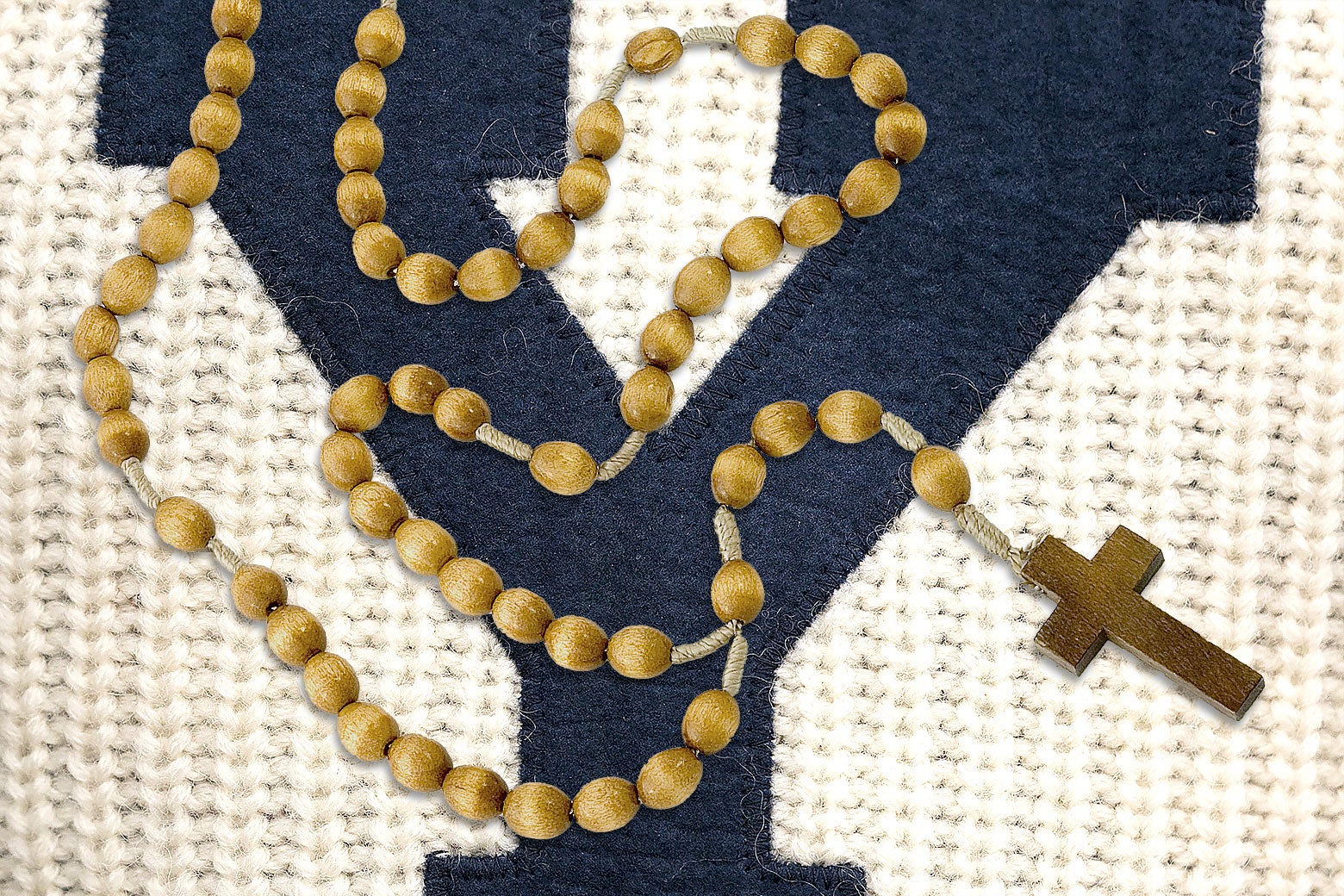
Last Spring,the most popular course at Yale was “Thr Catholic Intellectual Tradition”

“Last spring, the most popular history course at Yale was The Catholic Intellectual Tradition, a survey of Catholic thinking and writing from the first century to the present. It beat out such popular, evergreen classes as The Birth of Europe and The Roman Empire. I was asked to assist with this 85-student course as a teaching fellow. Each week, after scrolling past calls to defund the humanities and to automate the many jobs that make a liberal arts education possible, I found myself surrounded by eager students ready to engage with fourth-century Christology, medieval mysticism, World War II–era debates over “just war” theory, and much more.”

I Teach at Yale. There Are Gen Z Catholics All Around Me. I Know What Must Be Done.

Universities need to do more to connect with an increasingly religious student body.

A rosary draped over a Yale sweater.
Photo illustration by Slate. Photos by Erick W. Rasco/Sports Illustrated via Getty Images and thinkomatic/iStock/Getty Images Plus.

More: https://x.com/slate/status/2093030881074012171?s=46&t=IydJ-X8H6c0NM044nYKQ0w

TODAY: Archbishop Fulton J. Sheen Beatification


Livesreamed here at 2 pm:

https://www.celebratesheen.com/ 

Wednesday, September 23, 2026

Synodalism Marches On: Martyrs Need Not Apply

 To be "written in blood," meant (and still means) to make binding. God himself called the New Testament, written in His blood, an everlasting testament.

  • Perricone

    Martyrs are now passé—for the Synodalist Church, that is. 

    Martyrs spilled their blood for Truth come down from Heaven. For the Synodalist, there is no truth, only transactional process.

    Who would die for that?

    For the Synodalist, truth is an antediluvian embarrassment—and so are martyrs.

    To the chagrin of faithful Catholics, the Synodal Church marches forward. Any religion worth its salt cringes at the sandbox therapeutics of this comedy parading as Catholicism.

    Our one consolation is that its only appeal lay in the tony salons of the outré theological gentry. They pride themselves as standing aloof from the smelly Catholic hoi polloi who still clutch their rosaries and prayer books, standing on confessional lines in heartfelt contrition. Synodalists and their fellow travelers such as America,The National Catholic Reporter, and the elite Catholic universities have been birthing a New Christianity, one not shackled to a spent millennial past. These Bright Young Things (forgive me, Mr. Waugh) are no longer victims to a literal Gospel which takes God at His word. Part of their sparkle is a proud new revision of the Gospel page, unimpeded by the rude objectivity of the past.

    More: https://x.com/sitsio/status/2093043212109971826?s=46&t=IydJ-X8H6c0NM044nYKQ0w

BREAKING: Rupnik victims speak out


Reported by Michael Haynes via Twitter:

JUST IN: Alleged Rupnik victims pen open letter to Pope Leo

They argue “it is useless to report abuse to church authorities, because nothing will happen anyway, no one will be held accountable, and the victims will never see justice”

Call for transparency & impartiality so that Rupnik's trial “remain free of any shadow of doubt.”

They note they only heard his trial was underway from media reports – Vatican has been silent 

On @CatholicHerald


Monday, September 21, 2026

Mexican bishop bans laypeople from presiding over liturgical celebrations

 Niwa Limbu

Aug. 27, 2026


A Mexican bishop has issued a decree restricting laypeople from presiding over certain liturgical celebrations and wearing vestments reserved to the clergy

Bishop Carlos Enrique Samaniego López of Texcoco has issued a decree prohibiting laypeople who have not been instituted as acolytes from presiding over celebrations of the Word, funeral rites, sacramentals and other liturgical acts reserved to ordained ministers.

The decree, promulgated on 10 August in the Episcopal City of Texcoco, also prohibits laypeople from wearing the alb and other sacred vestments reserved to the clergy, whether during liturgical celebrations or outside them. 

Bishop Samaniego said the measures were necessary because of “irregular practices that distort the priestly ministry and the sacred character of liturgical acts”. Particular concern was raised about celebrations taking place in halls, gardens and other locations that have not been approved for worship, sometimes involving people who present themselves as ministers despite lacking the necessary authorisation.

The bishop specifically named former seminarians, religious, extraordinary ministers of Holy Communion and other lay faithful who have not been instituted in the stable ministry of acolyte. Such people, the decree states, may not preside over celebrations of the Word, funeral rites, sacramentals or “any kind of celebration or liturgical act proper to an ordained minister”, whether inside churches belonging to the Diocese of Texcoco or elsewhere.

The prohibition is accompanied by a warning about the use of clerical or liturgical clothing. “It is further forbidden, by reason of evident unlawfulness, to use or put on, within or outside liturgical acts, the alb or any sacred ornament or vestment reserved uniquely and exclusively to the clergy,” the decree states.

The regulation is directed not only at laypeople but also at priests serving in the diocese. Bishop Samaniego instructed priests incardinated in Texcoco, as well as priests from other dioceses who are invited to celebrate there, to ensure that liturgical acts are celebrated “validly and licitly”.

Priests are told not to “permit, consent to, or promote illicit practices, abuses, or deceptions” and are instructed to prevent laypeople from assuming responsibilities that belong exclusively to the ordained ministry.

More: https://x.com/niwalimbu1988/status/2092905675168862385?s=46&t=IydJ-X8H6c0NM044nYKQ0w

Sunday, September 20, 2026

Cardinal Sarah says restricting the TLM is ‘harmful, destructive for the Church’


Cardinal Sarah on the perfidious document 'Traditionis Custodes', based on manipulations and lies of the late Argentine pope who cruelly persecuted Catholics who adhered to Tradition:

"It did not seem to me a wise or respectful choice. But Benedict XVI, a man meek as a lamb, allowed himself to be humiliated, and, thus, in silence and prayer, offered his suffering to God to better immerse himself in Christ's pain for his Church and purify it.

The war on those who devoutly participate in the Mass, solely because they prefer one form over another: it is a shortsighted and entirely ideological attitude, therefore not pastoral and not Christian. It is harmful, destructive to the Church."

@SiateSanti

Saturday, September 19, 2026

The meteoric rise of Patrick Kelly

N.B. How many millions did the K of C spend on the disastrous and scandalous “Rapenik” mosaics covering every wall of their DC JPII chapel, which are now completely covered in shame?

 en.news

Leo XIV Appoints to Vatican Former CIA Analyst - $1.9M CEO of Knights of Columbus


Today, Leo XIV has appointed Patrick Kelly, Supreme Knight of the Knights of Columbus, as a member of the Dicastery for the Laity, Family, and Life.

Kelly has moved during his career through the U.S. military, congressional intelligence oversight, the State Department.

CIA for Five Years

Kelly worked for the Central Intelligence Agency for five years as an analyst after graduating from Marquette University in 1985.

He subsequently graduated from Marquette Law School, served as a Navy JAG, worked at the Justice Department's Office of Intelligence and Policy Review, and became legislative counsel to the House Permanent Select Committee on Intelligence.

At the Intelligence Committee, his chief responsibility was the annual Intelligence Authorization Act.

From Washington to Catholic Institutional Leadership

After Kelly's CIA/DOJ/House Intelligence work, he served at the State Department as senior adviser on international religious freedom and was its principal interlocutor with the Holy See. Then, in 2006, he moved directly into the Knights as VP for Public Policy.

Kelly became member of the board of the Knights of Columbus in 2013 and Deputy Supreme Knight in 2017. In 2021, he succeeded Carl Anderson as CEO, completing a 15-year rise through the organization's senior ranks.

Kelly accumulated senior positions in several major American Catholic institutions. He chaired the March for Life Education and Defense Fund from August 2012 until March 2021.

$1.9 Million in Reported Compensation

The latest publicly available IRS-derived filing for the Knights of Columbus reports $1,851,231 in reportable compensation for Kelly as “Director/Supreme Knight,” plus $50,356 in “other compensation”.

His reported compensation has risen considerably since he became Supreme Knight:
2021 $1,159,239
2022 $1,639,096
2023 $1,417,331
2024 $1,851,231

Founded in 1882 as a Catholic fraternal benefit society with a particular mission of protecting widows and orphans, the Knights today combine their activities with a vast insurance and investment operation. The latest filing reports approximately $31.2 billion in assets, $28.1 billion in liabilities and $3.08 billion in net assets.

Seven-figure compensation for the Supreme Knight predates Kelly. His predecessor, Carl Anderson, also received compensation packages reaching or exceeding these levels.

Access to the Vatican

As Supreme Knight, Kelly had regular direct access to Pope Francis: in October 2021, April 2022, April 2023, January 2024 and December 2024. Kelly used the meetings to brief Francis on Knights initiatives including humanitarian relief in Ukraine, evangelization, charitable programs and Catholic formation.

Kelly met the future Leo XIV in 2023, shortly after Prevost became prefect of the Dicastery for Bishops.

Following Prevost's election on May 8, 2025, Kelly issued an unusually expansive statement of institutional loyalty. Speaking for the Knights, he declared: “I pledge our loyalty to Pope Leo XIV,” and said, “The Knights of Columbus will always stand in solidarity with Pope Leo XIV.” Kelly added the new pope's priorities would shape the organization itself: “As it was with his predecessors, the pastoral priorities of Pope Leo XIV will guide and inform everything we do.”

Leo XIV received Kelly in an audience in July 2025 and again in October.

Thank you for visiting.

Followers

Kamsahamnida, Dziekuje, Terima kasih, Doh je, Grazie, Tesekur, Gracias, Dank u, Shukran

free counters