written by Gina Christian
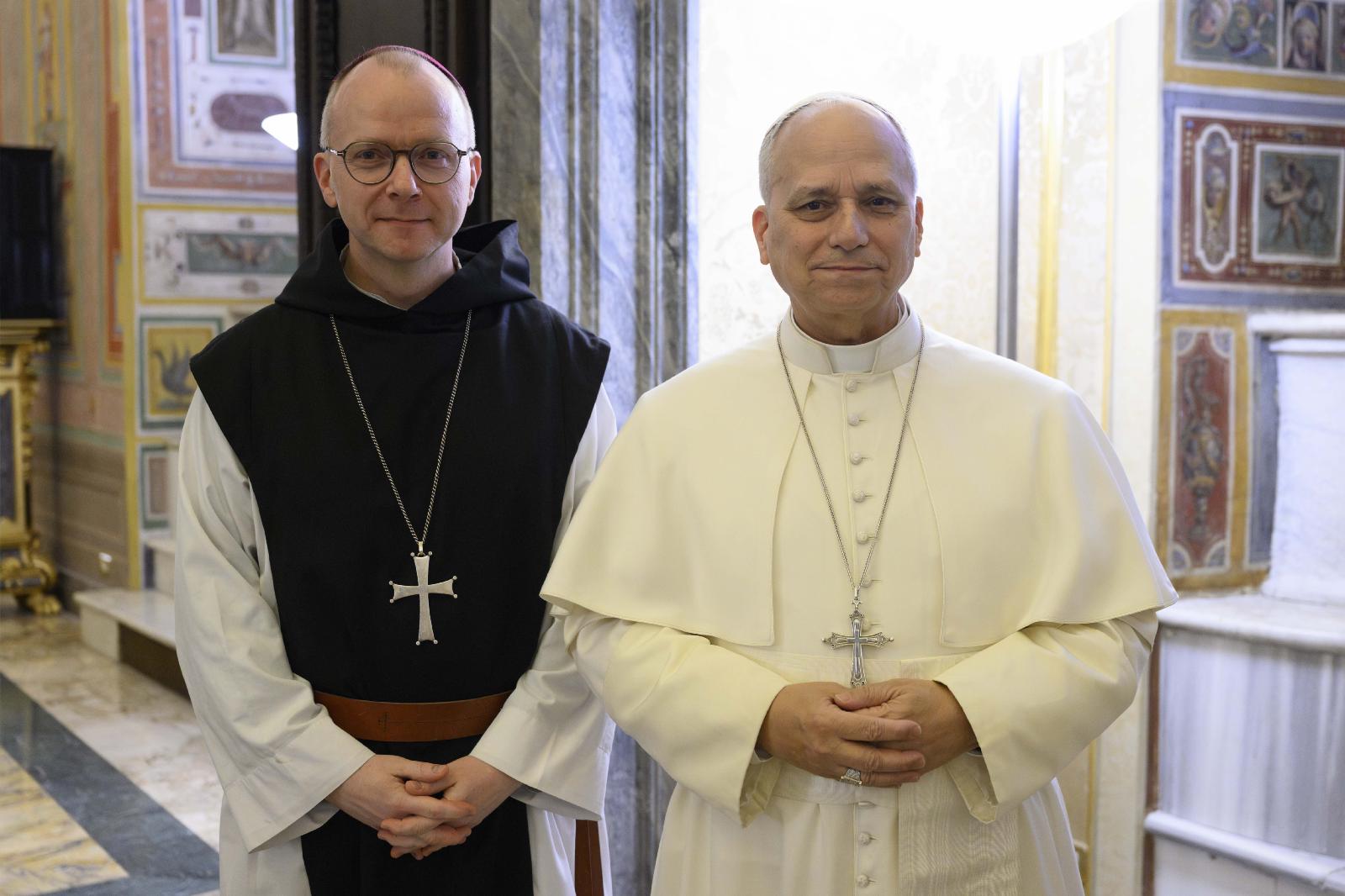
Editor’s note: You can also listen to Gina Christian’s interview with Bishop Varden here at the OSV Newscast.
BALTIMORE (OSV News) — During his May 7 visit to St. Mary’s Seminary in Baltimore, Bishop Erik Varden of Trondheim, Norway, a member of the Trappist monastic order, sat down with OSV News to share his insights on Christian hope, the dangers of AI and weaponizing the Christian faith, and the need for patience in the spiritual life.
This interview has been edited for length and clarity.
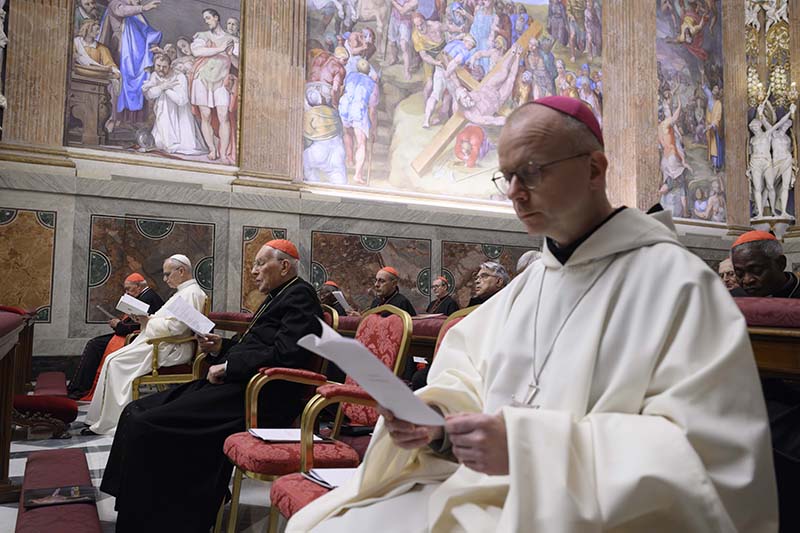
OSV News: You provided the reflections for the Lenten Spiritual Exercises in the Vatican for Pope Leo XIV and others, and in your final reflection, you focused on the theme of communicating hope. In the U.S. there’s been a real interest in Nordic noir films and books — often bleak and morally ambiguous — and a perception that Nordic culture is broadly the same. Do you find any irony in a Nordic bishop focusing on hope?
Bishop Varden: Well, your question makes me smile, because I’ve lived in a number of different countries, mainly in Europe, and I find that the more you move south in Europe, the more people have extravagant notions of the North, and the more they assume that it is an area of the world plunged in perpetual darkness, where everyone is given to drink and excess, and where everyone is on antidepressants, and where people keep killing themselves with axes.
‘It isn’t really quite like that’
And it isn’t really quite like that. I think this idea of the long Norwegian winter powerfully impacts the imagination. But what most people don’t realize is the extreme luminosity of a Norwegian summer, and that exposure to light without any trace of darkness. That is intrinsic to our way of just living the cycles of the year.
The phenomenon of Nordic noir is interesting. But I suspect that it is a genre that has arisen precisely because a few cunning authors have noticed that it corresponds to what people expect. And so they feed the stereotype because it sells, and because people find it entertaining in a slightly perverse sort of way.
But when you look at our own literature, poetry and music, it is to such an overwhelming extent a celebration of light and of the spring. The amount of Norwegian poetry and music dedicated to spring, to the melting of the ice and the appearance of the first flowers, is fascinating.
By all means, I’m not trying for a moment to deny that the Vikings weren’t brutal — but that wasn’t all they were about. I think that there is a constructed Nordic identity that spans centuries.
Lenten reflection about hope
OSV News: In your Lenten reflection about hope, you noted the modern tendency to either attach ourselves to our wounds or to airbrush them altogether. How do we avoid either extreme?







No comments:
Post a Comment