Saturday, March 21, 2026

We already have an “altered Mass”: it’s called the novus ordo

The addiction to constant change is a feature and not a bug of the Vatican II mentality, legitimized however subversively by reference to a certain “spirit” operating as a hermeneutic with loose reference to the documents of said council.

The Church is in need not of change, whether or not for its own sake. The Church has need of stability.

The Abbot of Solesmes proposes changing the traditional Mass to effect its insertion into the missal with the Mass of Vatican II unchanged. This is an oxymoron: the Vatican II liturgy is defined most precisely by its constant state of evolution, never being any one thing but under a constant process of permutation.

The only reality left in the public life of the Church which is not subject to the evolution of revolution is the holy Mass of tradition. It is defined most perfectly as that which does not change.

With due regard for the venerable scholarship of the good abbot, the most simple and unlearned of souls can perceive the value of the traditional liturgy as flowing from its perennial history as something precious which is handed down, organic and not manufactured.

Leave the holy Mass of tradition alone. It is nearly the only Catholic treasure we have left in this confused and rootless age of disbelief and sacrilege.

- a simple priest


The Priesthood is “too hard”? Marriage is hard, also.


The problem is the naïveté and immaturity with regard to life itself, with commitment of any kind necessary for all vocations.

There is no way of life possible without vocation and without the "no" to all the choices that re incompatible with the vocational choice. Chastity is hard for everyone. That’s why it’s a virtue. Celibacy is an excuse. Hopefully one day, for his own good, he will be able to be ashamed.

Ever hear of something called the "golden parachute"? I think the choice of his next vocation was made before he decided to quit his current one. Not sure what her name is...

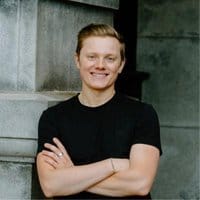
Alberto Ravagnani, 32, the former priest, photographed in his hometown of Milan for The Telegraph - Laura Larmo

I quit the priesthood because it’s too hard to stay celibate

Years of inner conflict over his sexuality have pushed Alberto Ravagnani to challenge one of Catholicism’s most divisive disciplines

https://x.com/telegraph/status/2028062830595854573?s=46&t=IydJ-X8H6c0NM044nYKQ0w

Friday, March 20, 2026

Bishops Abandon Teaching Role to Peddle Sentiment

 “The USCCB’s brief abandoned faithful American Catholics to their personal consciences on the issue, while demanding a fundamentally anti-Catholic approach: love divorced from the truth.”

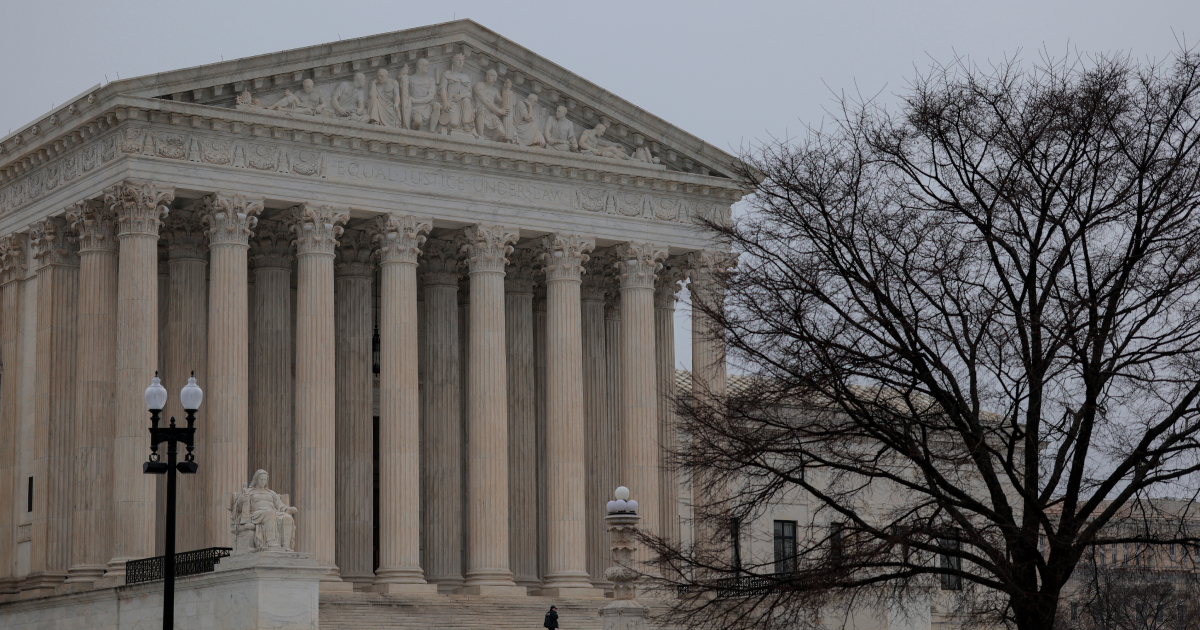
Jacqueline O’Hara argues that the US bishops’ intervention in Trump v Barbara substitutes moral sentiment for moral clarity, reducing a complex question of immigration, citizenship and the common good to an emotive appeal that fails to reflect the full breadth of Catholic teaching.

America’s bishops and the birthright blind spot

Jacqueline O'Hara

American Catholics deserve moral clarity regarding the ongoing immigration crisis. Unfortunately, the United States Conference of Catholic Bishops’ amicus brief in Trump v Barbara this week failed to give them that.

The brief categorised ending birthright citizenship as an immoral attack on human dignity and so reduced a complicated moral and political issue to an incoherent emotional appeal. It also excluded or misinterpreted key Catholic teachings regarding the obligations of citizens, national leaders and immigrants. It was not even written by a Catholic.

This half-hearted attempt at virtue-signalling...

More: https://thecatholicherald.com/article/americas-bishops-and-the-birthright-blind-spot

Thursday, March 19, 2026

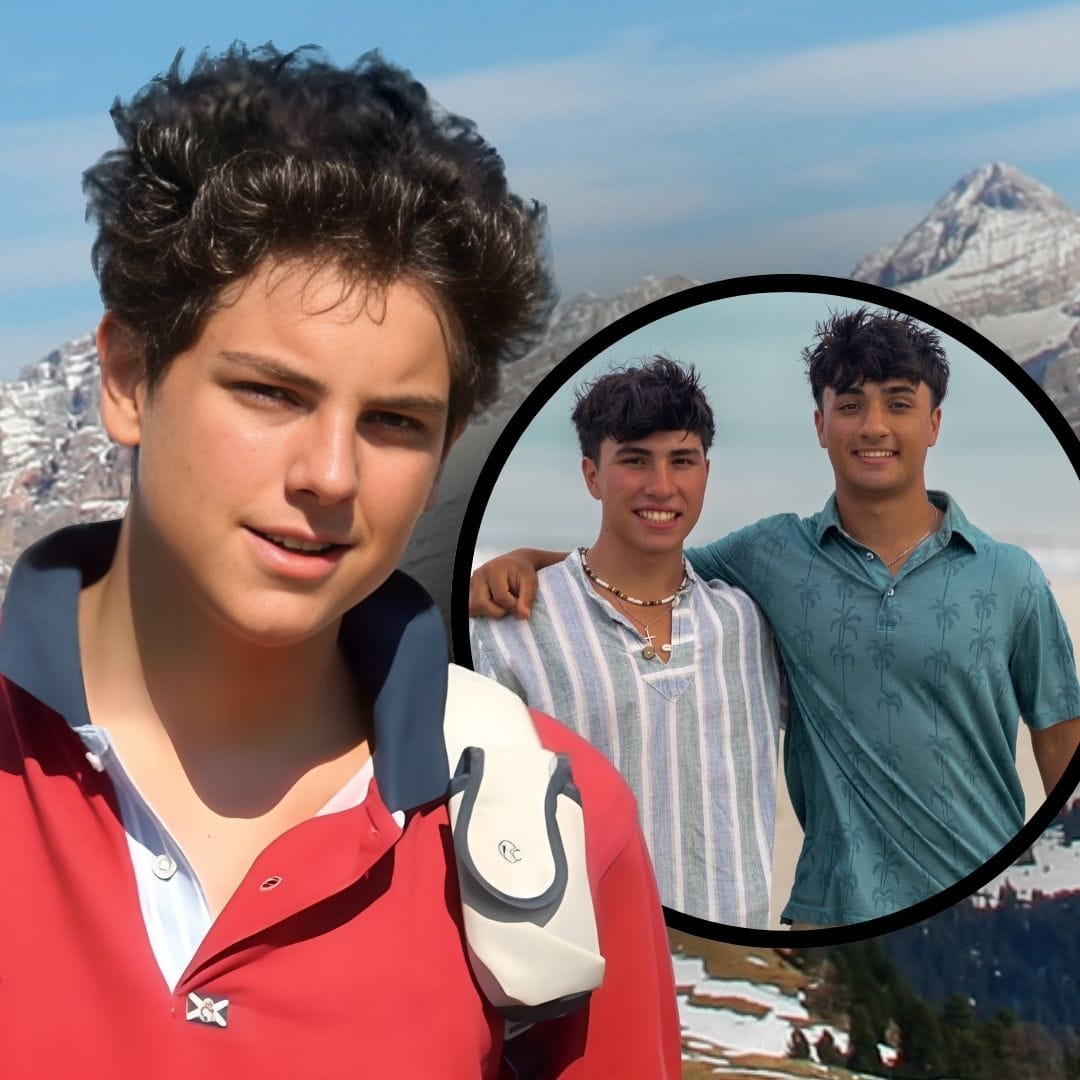
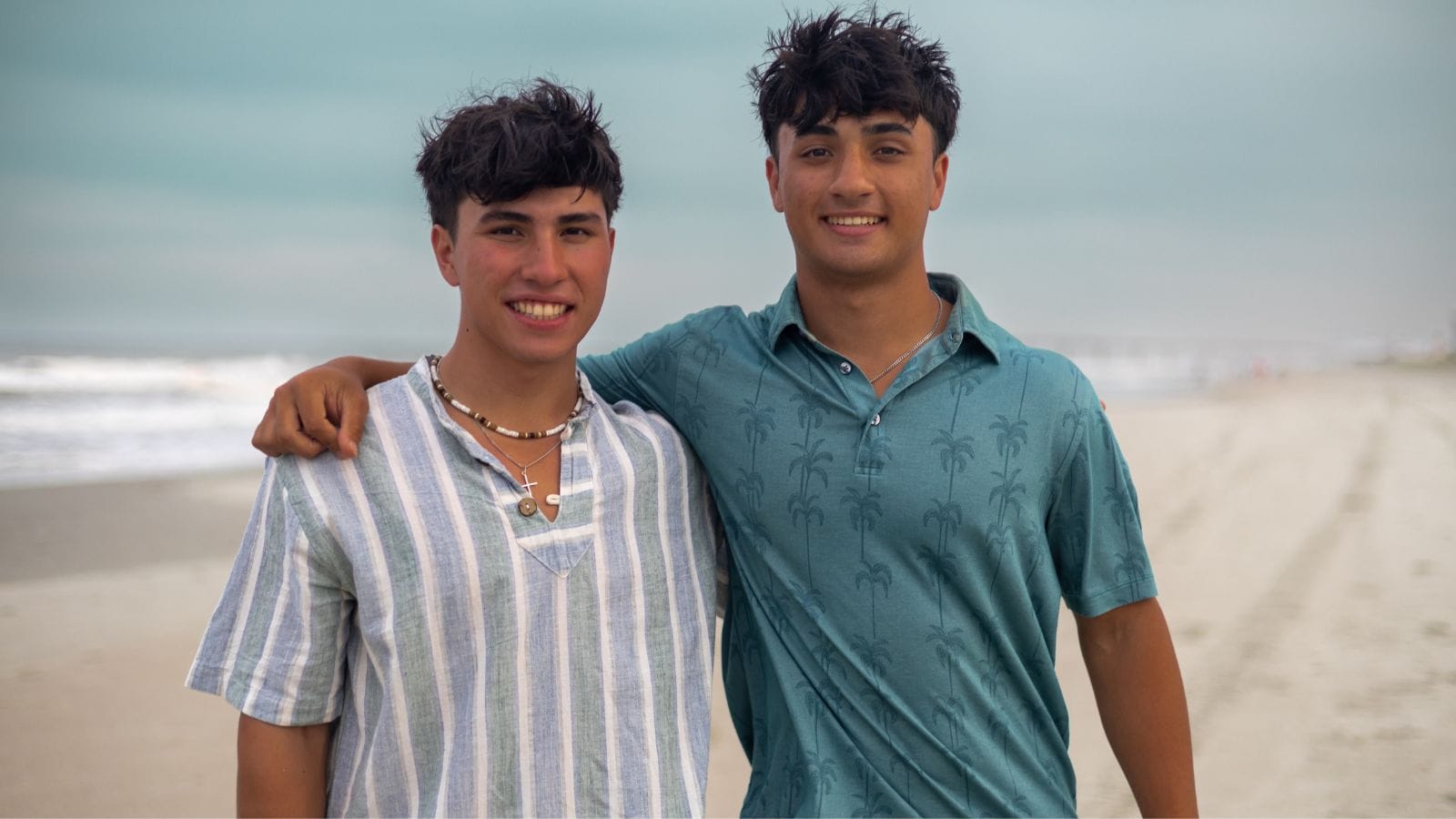
Catholic Brothers and College Students Create New AI Platform in Honor of St. Carlo Acutis

 Saint Carlo Acutis "is perhaps the best example of how to use technology to serve God."

The Signs of the Times: The St. Jerome Project and the Renewal of Catholic Education


When a group of parishioners at St. Jerome Parish in Hyattsville, MD, set out to save their school from closure, they had no idea they would be helping to launch a nationwide renewal of Catholic education. What accounts for this unlikely story?

On the fifteenth anniversary of the St. Jerome Educational Plan, join us to hear co-author Michael Hanby reflect on the meaning of this moment in the history of the Church, the reasons for this unlikely success, and the need for the systematic reform of Catholic education in America.

The lecture will take place on Tuesday, March 24, at 7:00 p.m., in Keane Auditorium, McGivney Hall.

An R.S.V.P. is requested; click here to register.

Wednesday, March 18, 2026

The recasting of the conclave

From Damian Thompson @holysmoke:

“These ‘secrets of the conclave’ were never very secret and are being spun by former Team Francis hacks like Lamb. Conservatives were less interested in electing Erdo than stopping Parolin, hence their votes shifting quickly to Prevost. Francis didn’t have a chosen successor but certainly would have preferred Prevost to a Secretary of State who exploited the Pope’s illness so shamelessly. That said, Francis’s fawning media allies now find themselves excluded from the inner circle. They pretend nothing has changed but everyone knows they’re sulking.”

Ref this:


How Pope Leo was elected: New details of dramatic conclave battle revealed


https://x.com/holysmoke/status/2028354754238169293?s=46&t=IydJ-X8H6c0NM044nYKQ0w

Tuesday, March 17, 2026

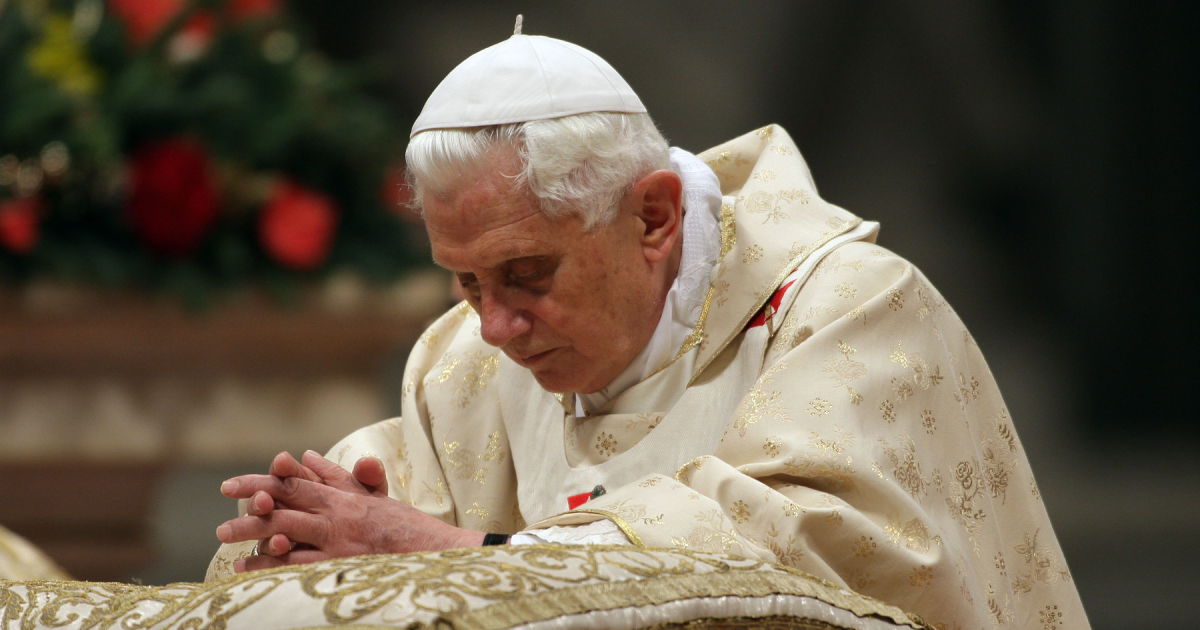
In full: unpublished letter reveals Benedict XVI’s final reflections on prayer and the future of faith

 Niwa Limbu

9 MIN READ
SHARE

An unpublished letter by Pope Benedict XVI, written little more than a year before his death, has been released in a new Italian book, offering an insight into the late pontiff’s theology and view of the future of the Faith at the end of his life.

The text appears in La fede del futuro, the fourth instalment in a collection of previously unpublished and hard-to-find writings by Joseph Ratzinger, issued by the Siena-based publishing house Edizioni Cantagalli. The series is introduced by a preface from the Vatican Secretary of State, Cardinal Pietro Parolin.

Cardinal Parolin writes that “the theme of the future is increasingly becoming the subject of theological reflection on faith, because it is by no means certain that humanity will continue to believe in God”. He notes that Ratzinger’s concerns in the essay are not limited to the fate of faith alone, but also embrace “the uncertainty and confusion prevailing in the world, which are causes of the loss of hope and of widespread fear”. The question of what lies ahead, he observes, is not confined to believers but touches all humanity.

Referring to the unprecedented acceleration of historical development in recent years, the cardinal says that humanity has been confronted with “extreme possibilities but also with extreme dangers”. The future, he says, “is no longer awaited with hope but with apprehension; it has even become a nightmare for many”. Against this backdrop he asks if “faith still has a role to play in shaping the world of tomorrow? Will the Church continue to exist?”

The unpublished letter by Benedict, dated Vatican City, 27 April 2021, is titled “Introduction: Thoughts on Christian Prayer” and sets out a concise yet theologically dense meditation on the nature of prayer as the fundamental religious act. Written in the final period of his life, the text returns to themes that characterised his theological work over decades, including Christ as mediator, the centrality of the Eucharist and the purification of human desire.

Pope Benedict XVI begins by defining prayer in general terms as “the fundamental religious act” and “the attempt to enter concretely into contact with God”. He immediately distinguishes Christian prayer from other forms by stating that it is conducted “together with Jesus Christ and, at the same time, prays to Him”. Christ, he writes, is both man and God and therefore “can thus be the bridge, the pontifex, who makes it possible to overcome the infinite abyss between God and man”.

In this sense, he continues, Christ is “the ontological possibility of prayer” and also its “practical guide”. Benedict recalls the Gospel scene in which the disciples, having seen Jesus at prayer, ask: “Lord, teach us to pray” (Lk 11:1). He notes that they were aware that even John the Baptist had instructed his followers in prayer, but that Jesus was “infinitely closer to God than even the greatest religious figure: John the Baptist”. From this he draws out what he calls the two fundamental characteristics of prayer, that which relates to being and that which relates to awareness, intertwined in a profound bond with God that consists in abiding with Him.

Turning to what he describes as mistaken or insufficient forms of prayer, Benedict recalls the prophetic words of Samuel: “To obey is better than sacrifice, to heed is better than the fat of rams” (1 Sam 15:22). He writes that the juxtaposition with the Cross is evident throughout Christ’s proclamation and that Christian prayer, united to Jesus, is inseparable from His self-offering.

He states that Christian prayer, insofar as it is prayer together with Christ, “is always anchored in the Eucharist, leads to it, and takes place within it”. The Eucharist, he writes, is “prayer fulfilled with one’s whole being” and represents the “critical synthesis of cult and true worship”. In it, Jesus has pronounced His definitive “no” to mere words and to animal sacrifices, placing in their stead “the great ‘yes’ of His life and death”.

For this reason, Benedict describes the Eucharist as both “the definitive critique of cult” and “the cult in the broadest sense of the term”. He notes that the Fathers of the Church characterised it on the one hand as the end of pagan custom and on the other as that which defines Christianity itself as prayer. He adds: “I believe we ought to reflect much more deeply on this fundamental opposition.”

The letter proceeds to emphasise the realism of Jesus’s teaching on prayer. Citing the parable of the friend who refuses to rise from his bed to give bread, Benedict writes that prayer is “always also an overcoming of our inertia, which inspires so many excuses for not rising”. To pray, he says, “means to push against this inertia of the heart” and involves the humility of bringing even “the small things of our daily life” before God and asking for His help.

In a concluding reflection, he addresses what he calls objections to petitionary prayer, namely the view that true prayer should consist solely of praise rather than repeated requests. Such a position, he writes, would be foolish if it assumes that God should not be troubled with human needs. On the contrary, “we need God precisely in order to be able to live our everyday life starting from Him and oriented toward Him”.

He points to the structure of the Lord’s Prayer, which consists of seven petitions, as evidence that asking is intrinsic to Christian prayer. “Asking God also and above all means purifying our desires so that we can place them before God and so that they may be inserted into the ‘we’ of the family of Christ,” he writes.

The publication of the letter in La fede del futuro offers a final glimpse into the spiritual mind of Pope Benedict XVI in the closing phase of his life, when, in retirement and physical frailty, he remained intellectually precise. The full letter is reproduced below with kind permission of Edizioni Cantagalli: 

INTRODUCTION THOUGHTS ON CHRISTIAN PRAYER

by Benedict XVI

In general terms, prayer is the fundamental religious act: it is, in some way, the attempt to enter concretely into contact with God. The peculiarity of Christian prayer lies in the fact that one prays together with Jesus Christ and, at the same time, prays to Him. Jesus is at once man and God and can thus be the bridge, the pontifex, who makes it possible to overcome the infinite abyss between God and man.

In this sense, Christ is also, generally speaking, the ontological possibility of prayer. For this reason, He is also the practical guide to prayer. That is why His disciples, who had seen Him pray, addressed this request to Him: “Lord, teach us to pray” (Lk 11:1). They recalled that John the Baptist had taught his disciples to pray, knowing well that He is infinitely closer to God than even the greatest religious figure: John the Baptist. 

Thus emerge the two fundamental characteristics of prayer: that relative to being and that relative to awareness. They are intertwined with one another. The profound bond with God, in general terms, consists in abiding with Him. In Jesus’ school of prayer, our knowledge of Him grows, as does our closeness to Him. In this regard, we must also keep in mind Jesus’ criticism of mistaken or insufficient ways of praying.

The juxtaposition with the Cross, evident throughout His proclamation and even in the prophetic words that had marked the tenor of prophecy up to Jesus—“To obey is better than sacrifice, to heed is better than the fat of rams” (1 Sam 15:22)—is already clear. Moreover, Christian prayer, insofar as it is prayer together with Jesus Christ, is always anchored in the Eucharist, leads to it, and takes place within it.

The Eucharist is prayer fulfilled with one’s whole being. It is the critical synthesis of cult and true worship. In it, Jesus has said His definitive “no” to mere words and His “no” to animal sacrifices, and He has placed in their stead the great “yes” of His life and death.

Thus the Eucharist represents the definitive critique of cult and, at the same time, the cult in the broadest sense of the term. The Fathers of the Church rightly characterized it on the one hand as the end of paganism, as consuetudo [custom], and on the other as characterizing Christianity itself as prayer. I believe we ought to reflect much more deeply on this fundamental opposition.

This fundamental orientation of Jesus’ dramatic history of prayer enables us to understand the whole realism with which He went about His proclamation. The parable of the man who did not want to get up to give bread to his friend clearly says that prayer is always also an overcoming of our inertia, which inspires so many excuses for not rising. To pray means to push against this inertia of the heart and therefore also means the humility of bringing before God even the small things of our daily life, asking for His help.

One final point.

Often, the realistic and humble way of praying is presented as an objection to petitionary prayer as such: that adequate prayer should always and only be praise of God, not continual begging. This would already be foolish, since God could not and should not be bothered with our small things. In our daily life, however, we must think of ourselves. Yet in reality we need God precisely in order to be able to live our everyday life starting from Him and oriented toward Him. Precisely in not forgetting that our Father is the one in whom we trust, the Lord’s Prayer consists of seven petitions.

Asking God also and above all means purifying our desires so that we can place them before God and so that they may be inserted into the “we” of the family of Christ.


Will the Holy Sepulchre remain closed for the feast of the Lord’s Resurrection?


@paracleto4 on Twitter/X:

THE HOLY SEPULCHRE IS CLOSED.  

THE SITE OF CHRIST'S RESURRECTION. CLOSED!  

From February 28, 2026.  

Never happened in 2000 years of history.  

Not during the Crusades.  

Not during the world wars.  

Not during the pandemic.  

Today it is closed.  

Holy Week is approaching.  

Golgotha is inaccessible.  

The Empty Tomb is barricaded.  

Father Ibrahim Faltas, Custodian of the Holy Land, implores the Israeli authorities to reopen it at least for Holy Week.  

Now tell me: whoever closes the holiest place in Christendom during Lent—is he a friend to Christians?  

I've been saying it for decades and they ridiculed me.  

Answer.  

The doors are closed. And the world is silent.  

More: https://x.com/paracleto4/status/2033549878756852029?s=46&t=IydJ-X8H6c0NM044nYKQ0w

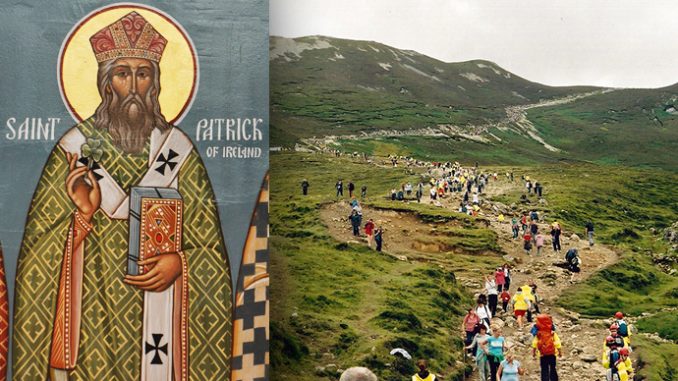
The Lenten fast of St. Patrick atop Ireland’s holy mountain

 It is worth recalling Patrick’s own intense devotion to the Lenten fast and the fruit it bore for the conversion of the Irish, so we might embrace something of his spirit.

Left: Pilgrims on Croagh Patrick in County Mayo, Ireland. (Image: Alan James / Wikipedia); right: Icon of Saint Patrick from Christ the Savior Russian Orthodox Church, Wayne, WV. (Image: Wikipedia)

As Catholics, we celebrate the saints for their heroic witness to our Christian Faith. Each saint has a day on the Church calendar, which typically falls on the date of death, known as their dies natalis, “heavenly birthday.” These are days for merriment, meant for taking a break from the austerities typical to the Christian life, which is why they are known as “feasts.”

St. Patrick’s Day has an outsized influence in popular culture because of the large Irish diaspora spread across the globe. As the saying goes: “Everyone’s Irish on St. Patrick’s Day.” Celebrations in honor of Ireland’s patron saint are characterized by great festivity with parades, the playing of bagpipes, traditional dance, the wearing of green, and time in the pub.

There is a problem, however. This feast on March 17th always falls during the fast of Lent.

While breaking the fast for a saint’s feast is certainly in keeping with Catholic culture and even piety, it is important for the revelers enjoying the celebrations of the “Apostle of Ireland” to return to the fast at day’s end. The best way to honor the saints is by imitating their virtues.

It is worth recalling, then, Patrick’s own intense devotion to the Lenten fast and the fruit it bore for the conversion of the Irish, so we might embrace something of his spirit.

To best do this, we follow in the footsteps of the one hundred thousand pilgrims a year who make their way to Ireland’s holy mountain, known as Cruach Phádraig, “Croagh Patrick.” It was there that Ireland’s patron spent the forty days of Lent in the year 441, praying and fasting on its summit.

The anglicized word “croagh” refers to a hill or mountain that is shaped like a cone or stack. The Irish refer affectionately to the mountain as the “Reek” which comes from the old English word hrēac, meaning a “haystack” or “pile.”

More: https://www.catholicworldreport.com/2026/03/17/the-lenten-fast-of-st-patrick-atop-irelands-holy-mountain/

BREAKING: A Cardinal Offers the “Forbidden” Mass

From The Remnant: 


The Tide Is Turning. . . 

Cardinal Willem Eijk Celebrates His First Traditional Latin Mass 

In a powerful sign of the growing Traditional Catholic revival in Europe, Cardinal Willem Eijk of the Netherlands celebrated his first-ever Pontifical High Mass in the Traditional Latin Rite on Laetare Sunday at the historic Church of the Immaculate Conception in Oss—before a completely packed congregation of more than 700 faithful, most of them young. In his sermon, the Archbishop of Utrecht strongly rejected modern attempts to reduce Christ’s miracles to mere symbolism, warning that such “trivialization of catechesis” helped fuel today’s crisis of faith.

More: https://x.com/michael_j_matt/status/2033693134551417332?s=46&t=IydJ-X8H6c0NM044nYKQ0w

N.B. In comments to those gathered the cardinal jested about celebrating “the forbidden Mass.”

Monday, March 16, 2026

Bishop Erik Varden on the love of young people for Tradition

“It seems short-sighted to brush aside the hunger of many young Christians for ritual and formality by branding it as imbecile nostalgia. Why not enable them to find within their own tradition a patrimony rightfully theirs?"

- Bishop Erik Varden in September 2024


Saturday, March 14, 2026

1 Million: “… up to 17% of children nationwide are the victim of sexuaI abuse in our public schools.”

 Catholic priests molest kids.. right? 

How come there was such an intentional push to spread this idea in animated media, movies, and comedy routines? 

How come no one ever talks about the rate of crime against children in public schools?

Recently Catherine Herridge published a document claiming up to 17% of children nationwide are the victim of sexuaI abuse in our public schools. This would be 8 million students.

The 2004 John Jay Report identified approximately 4,392 Catholic priests and deacons in the U.S. who were accused of sexual crimes over 52 years.

During that same time period in the United States, there were roughly 3,320,000 sexual crimes against children 

There are roughly 63,000 cases of substantiated sexual crimes against children Every year, based on data from Child Protective Services (CPS), the National Children's Alliance, and the CDC. Experts estimate that only 1 in 3 of these crimes against children are reported to authorities.

I’m not diminishing these crimes. clearly, crimes against children are horrible.

Before the 1974 Child Abuse Prevention and Treatment Act, these crimes weren’t properly tracked. But in the 1990s, nearly 100,000–150,000 cases of child sexual abuse were reported every single year.

Now, this should never happen within the Catholic faith, but People who bring up the criticism of the Catholic Church never compare other Christian denominations like Lutheran, Baptist, Methodist, and Presbyterian.

Any person committing these crimes should be held accountable. 

The Roman Catholic Church paid over $3 billion in victims' compensation, and under Pope Francis, there were greater efforts to track, categorize, publish, and punish any crimes.

The Catholic Church hands over all documentation from internal investigations to secular law enforcement; the Catholic Church also has official reporting and investigator services for religious leaders at every single level.

We don’t see the same efforts by Protestant denominations; likewise, we don’t see the same publication and attention given to Jewish religious communities or Muslim religious communities and interfamilial abuse.

These calumnies are pitted against the Catholic Church to try to expose some hypocrisy… so its religion must be false. Two thousand years of philosophy from thousands of thinkers and hundreds of authors in the Scholastic Age are immediately ignored because man made institutions are imperfect.

The truth is, every institution where there’s a power imbalance that involves children has some sort of abuse, and Catholic churches and Catholic schools have fewer cases per capita than public schools or any other religious institution.

Source @OurOwnNation on Twitter/X.

Friday, March 13, 2026

Pope slams thirsty priests for chasing internet followers

 ​​Pope Leo XIV is chastising priests for turning their calling into social media stardom.

During a meeting with priests of the Diocese of Rome, the Chicago-born pontiff told his clergymen not to fall for the trap of TikTok and other social media apps, and warned them not to conflate online popularity with real life, Vatican News reported.

He said that gaining “likes” and “followers” through “an illusion on the internet, on TikTok,” is not the same as being rooted in the real world.

Pope Leo XIV warned his clergymen against online fame. / ALBERTO PIZZOLI / Alberto Pizzoli/AFP via Getty Image “If we are not transmitting the message of Jesus Christ, perhaps we are mistaken, and we must reflect very carefully and humbly about who we are and what we are doing,” Pope Leo XIV said on Friday.

“If we are not transmitting the message of Jesus Christ, perhaps we are mistaken, and we must reflect very carefully and humbly about who we are and what we are doing,” Pope Leo XIV said on Friday.

The pope’s comments come as rates of Catholicism have stabilized among Americans after a long period of decline, according to data from the Pew Research Center. Many Catholics point to so-called “celebrity priests”—spiritual leaders who have gained immense followings on social media—as part of the reason why.

Catholic priest influencer Father David Michael, for example, counts more than 1.2 million followers on Instagram, where he routinely posts comedic videos about his life as a priest and answers questions about the Catholic Church.

Celebrity priests like Father David Michael are credited with reviving Roman Catholicism for young adults. / Instagram / Screenshot/Father David Michael

The pontiff, however, doesn’t seem to be all that amused. He had details of his personal life plastered on the internet after he was chosen as pope last year—particularly by his eldest brother, 74-year-old Louis Prevost, a self-described “MAGA type.”

Prevost gained notoriety for his Facebook reposts, which include a video of Rep. Nancy Pelosi from 1996 with the caption, “These f---ing liberals crying about tariffs is just unreal. Do they not know that there is a thing called video? Just listen to what this drunk c--t has to say in the mid90’s long before her husband had grindr dates.”

More: https://www.msn.com/en-us/news/us/pope-slams-thirsty-priests-for-chasing-internet-followers/ar-AA1X9zKK?ocid=msedgntp&pc=U531&cvid=69a1f065a4ea48378d371f0ab5dd5d70&ei=13


Thank you for visiting.

Followers

Kamsahamnida, Dziekuje, Terima kasih, Doh je, Grazie, Tesekur, Gracias, Dank u, Shukran

free counters