After years of debate and revisions to its statutes, the new Synodal Conference still lacks Vatican approval. The postponement of its November meeting also reflects the change in direction taken by the Holy See under Leo XIV.
The first meeting of the Synodal Conference of the Catholic Church in Germany, scheduled for 6 and 7 November in Stuttgart, will not take place. Hotel rooms booked for delegates and bishops have already been cancelled, and no alternative date has yet been set. The announcement was made on Friday 28 August by the Central Committee of German Catholics (ZdK), the lay body which, together with the German Bishops’ Conference (DBK), was due to establish the new organisation. There is only one reason: the Vatican has still not approved the statutes establishing it.
This, more than anything else, shows how the ground had already begun to shift beneath the German Synodal Way by 8 May 2025 — a process Robert Francis Prevost had been able to observe at close quarters during his years at the head of the Dicastery for Bishops.
The Synodal Conference is intended to bring together, with equal voting rights, 27 diocesan bishops, 27 representatives of the ZdK and a further 27 Catholics elected from among clergy and laity, making a total of 81 members tasked with dealing with the life of the Church in Germany at national level. It is meant to be the culmination of the German Synodal Way (Synodaler Weg), the reform process launched in 2019 in the wake of the clerical sexual abuse scandal, after the independent study known as the MHG Study had, in the autumn of 2018, quantified for the first time the scale of abuse within the German Church.
The Synodal Way concluded in March 2023, after six often tense plenary assemblies and around 150 pages of resolutions on issues including the ordination of women as deacons, lay preaching during Mass and priestly celibacy. Its most ambitious proposal, however, concerned governance: the creation of a permanent body made up jointly of bishops and lay people, replacing the Joint Conference (Gemeinsame Konferenz), which has operated since 1976 and brings together the DBK and ZdK twice a year, but has no decision-making powers.
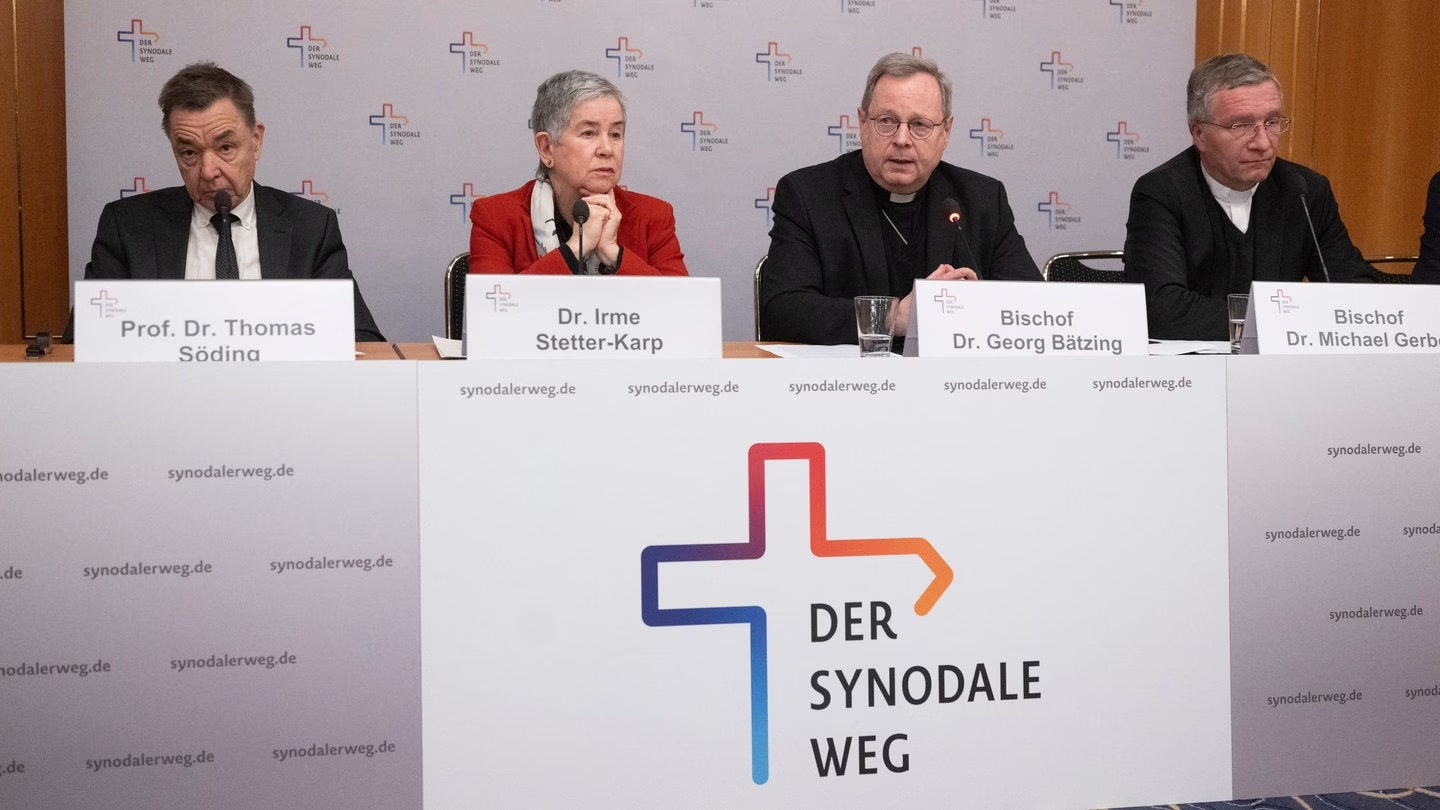
As early as September 2022, when the proposal was still only a draft, the Holy See made clear that neither the German bishops nor the participants in the Synodal Way had the authority to establish such a body, which risked placing itself in practice above the Bishops’ Conference, contrary to the ecclesiology of the Second Vatican Council. Despite that veto, in March 2023 the Synodal Way nevertheless established an interim body, the Synodal Committee (Synodaler Ausschuss), tasked with drafting, by March 2026, the statutes of the future permanent body. Four diocesan bishops - Cardinal Rainer Maria Woelki, Archbishop of Cologne, and the bishops of Eichstätt, Passau and Regensburg, Gregor Maria Hanke, Stefan Oster and Rudolf Voderholzer respectively - chose not to take part, considering it incompatible with the universal synodal process launched by Pope Francis, while not rejecting synodality itself.
The statutes, drawn up between 2024 and 2025, include from their opening lines a clause specifically intended to reassure Rome: the Synodal Conference is required to “respect the constitutional order of the Church and safeguard the rights of diocesan bishops”. The most sensitive issue, however, remained the actual powers of the new body. The initial draft gave it the authority to deliberate and decide on ecclesial matters of supra-diocesan importance without further qualification. Following objections from Rome, that wording was amended, making decisions subject to “synodal decision-making processes”, an expression taken from the final document of the universal Synod on Synodality, which concluded in 2024. There was also a second issue, this time financial. Part of the Synodal Committee wanted the new financial commission of the Synodal Conference to take over the responsibilities of the board of the Association of German Dioceses (VDD), the body that coordinates the budgets and assets of the country’s 27 dioceses. The proposal met with resistance from, among others, the Bishop of Würzburg, Franz Jung, and the Archbishop of Paderborn, Udo Markus Bentz, and ultimately remained in the statutes only as a non-binding statement of direction.
The resistance has not come solely from Rome. A number of lay people and priests have raised concerns and accused the leaders of the body of excluding those who voiced doubts.
More: https://x.com/silerenonpossum/status/2094684192965599510?s=46&t=IydJ-X8H6c0NM044nYKQ0w






No comments:
Post a Comment