
Silere non possum @silerenonpossum
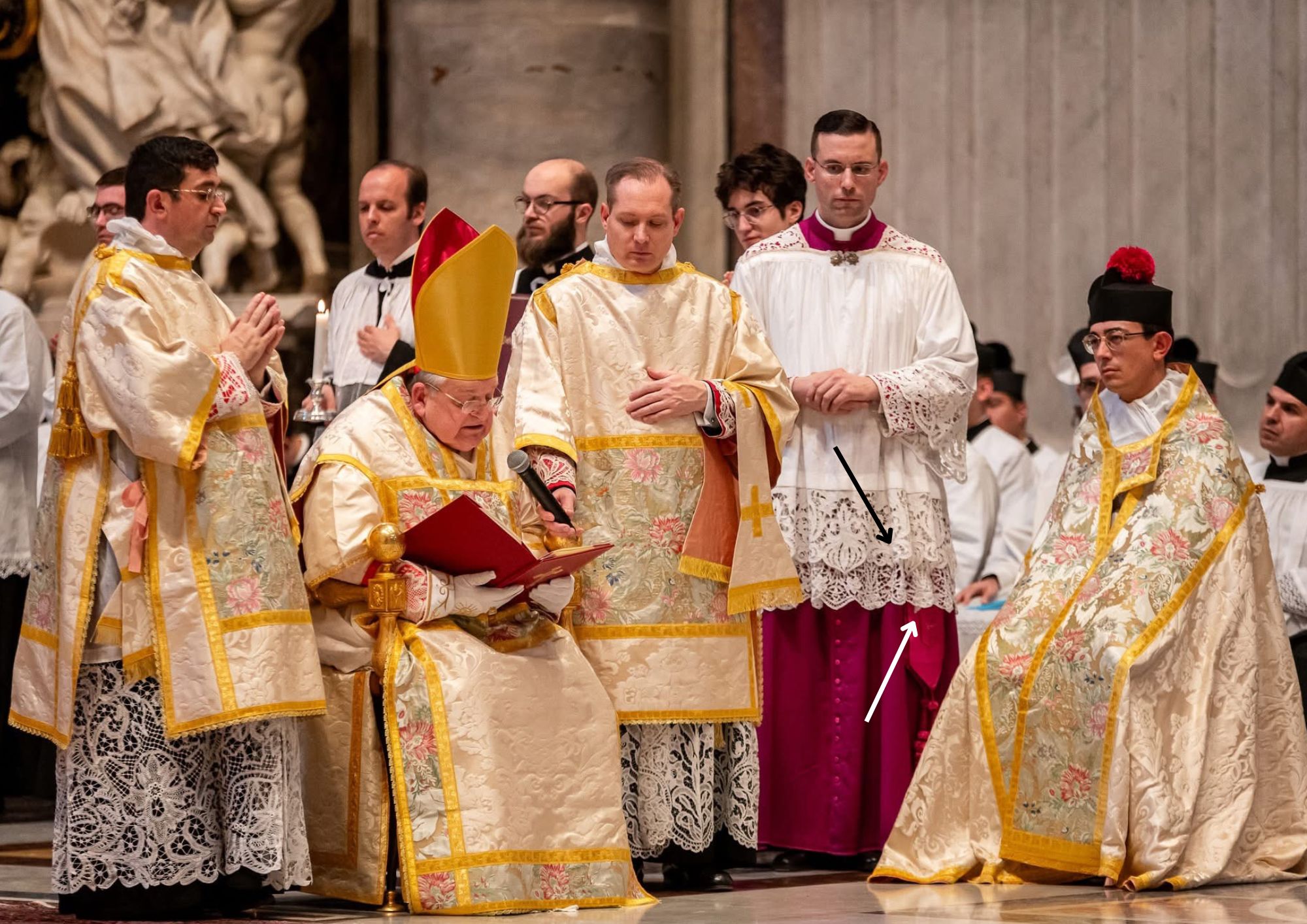
In recent days, a video has circulated showing a parish priest of the Archdiocese of Milan who, at the end of Holy Mass, publicly mocked a group of faithful who had traveled to Rome to take part in liturgical celebrations according to the Roman Missal promulgated by Saint John XXIII in 1962, inside St. Peter’s Basilica.
The episode - serious in itself - becomes even more disturbing given the context: the Eucharistic celebration, the very place where the Church recognizes itself as one body. And yet, precisely there - on the altar of communion- the voice of division was raised. Once again, we witness a manipulation of the liturgy, turned into a battleground and a source of scandal, even for the faithful. Once, such tensions remained confined to clerical parlors, suffocating and self-referential; today, they spill into the ecclesial community, as if someone were trying to recruit an army for their own private wars.
This episode goes far beyond mere imprudence: it exposes a deep wound in contemporary ecclesial culture, one that drives some to use irony as a shield, the liturgy as a stage, and words as instruments of power. It is an ancient dynamic, present both in modernism and traditionalism, but today it has taken on exasperated forms, leaving the clerical enclosures to infect even the People of God, drawn into logics of mockery and opposition that should remain far from the mystery of faith.
The Role-Play: Those Who Wound and Those Who Hide
It is hardly surprising that those who utter such remarks are often the same who, in their parishes, foster division, create a tense climate, and make life difficult for anyone who does not conform to their views. Often, these attitudes go hand in hand with the tendency to welcome problematic or controversial figures - people known for their arrogance or instability, previously expelled from convents (and earlier still, from seminaries), now “rehabilitated” in some distant Milanese parish, where they teach religion following the familiar pattern: kicked out through the door, re-entering through the window.
Behind the mask of pastoral zeal often lie fragile personalities driven by a need for control. From a psychological point of view, public irony used to belittle others is a narcissistic defense mechanism: it serves to remain at the center of attention, to appear superior, to elicit approval, while avoiding any genuine self-examination. As Erik Erikson would put it, it is a “regressive mechanism of identity” - the mockery of anotheras a way to reinforce a shaky self-image.
No comments:
Post a Comment